Think & Do

Intelligence for Africa's new merchant class.

ICRD Group's thought leadership shapes agendas, informs policy, and inspires action from boardrooms to grassroots.

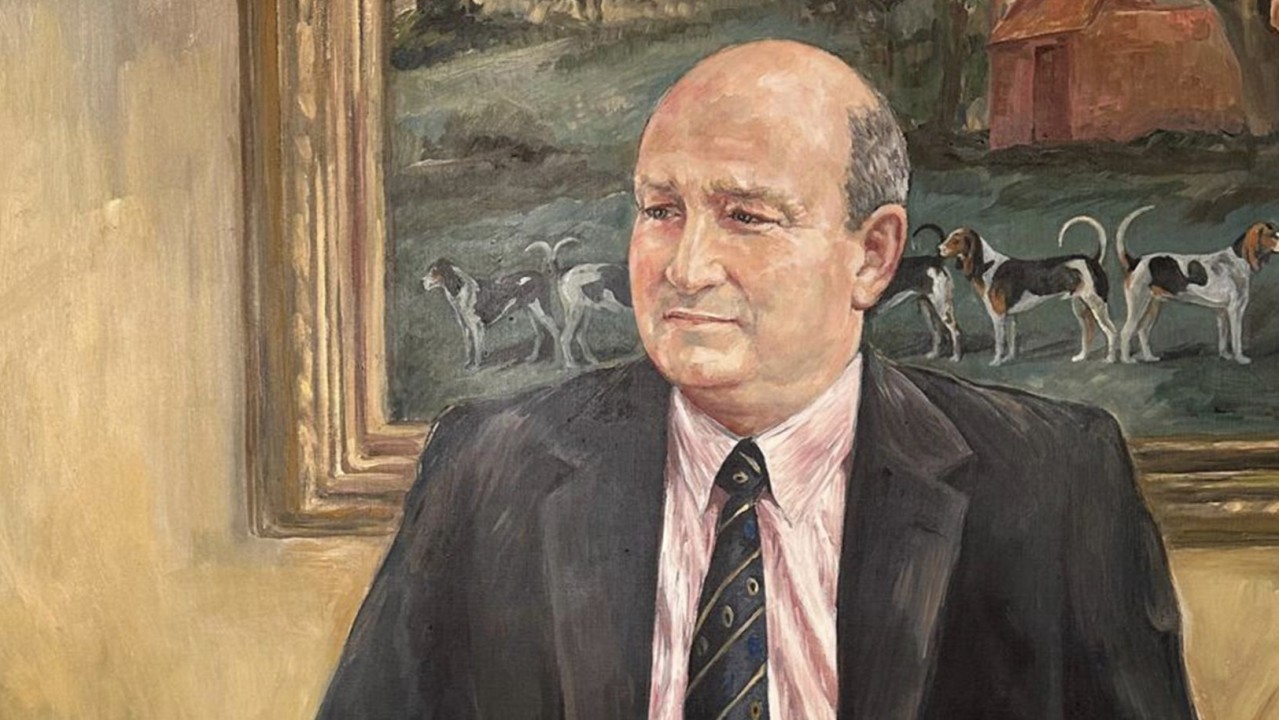
Building Legacies That Stand the Test of Time: The Story of Donald Gordon and Liberty Life

Donald Gordon's story is one of relentless ambition, purposeful leadership, and transformative impact. At just 26 years old, Gordon founded Liberty Life in 1957, not merely as a business but as a bold vision to redefine financial security in South Africa. His journey, as chronicled in Ken Romain's Larger Than Life, offers entrepreneurs a masterclass in resilience, innovation, and the power of purpose.

Portrait of Donald Gordon
Donald Gordon, founder of Liberty Life.

A Vision Rooted in Personal Pain

Gordon's inspiration came from observing his father's struggles. After a lifetime of hard work, his father's retirement lacked the financial security that should have been his reward. This deeply personal experience ignited Gordon's determination to ensure that others could access financial dignity, freedom, and opportunity.

Liberty's flame, inspired by the Statue of Liberty, became a symbol of this mission - a beacon of hope and possibility for all.

At just 26, Gordon spent nine months tirelessly pitching his idea to South Africa's financiers, eventually raising R100,000 to bring his vision to life. In 1958, Liberty Life was officially registered, and by October of that year, Gordon sold the company's first life policy. It was the beginning of a journey that would forever change the financial landscape of South Africa.

Innovating Through Adversity

Liberty Life's launch coincided with a tempestuous era in South Africa. Amid the tightening grip of apartheid, Gordon introduced South Africa's first retirement annuity products in 1960, paving the way for ordinary citizens to secure their financial futures.

Two years later, Liberty made history as the first life assurance company to list on the Johannesburg Stock Exchange (JSE), offering shares at R2.70 each. This marked a watershed moment for the company, drawing record subscription and cementing its place as a financial innovator.

  • Unit-Linked Insurance Products (1965): Liberty became the first company to link life insurance benefits to unit trusts, introducing a revolutionary concept that blended investment with life cover.
  • Incentive Share Schemes (1980): Liberty launched South Africa's first employee share scheme, making equity ownership accessible to all employees during apartheid - a bold act of inclusion and empowerment.
  • Acquisition of Sandton City (1970s): Liberty funded and developed Sandton City, turning it into Africa's richest square mile and reshaping Johannesburg's economic geography.

In 1968, Liberty acquired Guardian Assurance to form Liberty Holdings, and by the 1980s, it expanded internationally with listings on the London Stock Exchange and acquisitions in the UK property market. Gordon's ability to spot opportunities and act decisively propelled Liberty into a global player while maintaining its roots in South Africa.

The Power of Legacy and Social Responsibility

Gordon's vision extended far beyond Liberty's financial success. In 1971, he launched the Donald Gordon Foundation, the largest private charity in Southern Africa, to ensure his work uplifted communities and created lasting social impact.

The foundation's contributions include the establishment of the Gordon Institute of Business Science (GIBS) with the University of Pretoria, which continues to shape future leaders across Africa.

Gordon's philanthropy also extended to his alma maters, King Edward VII School (KES) and the University of the Witwatersrand, with significant donations funding initiatives like the Donald Gordon Medical Centre and Donald Gordon House. Even internationally, Gordon's generosity was unparalleled - he donated £20 million to the Royal Opera House in London, earning him a knighthood from Queen Elizabeth II for his services to the arts and business.

Lessons for Modern Entrepreneurs

  1. Purpose Drives Resilience: Gordon's mission to ensure financial dignity gave him the tenacity to overcome challenges. Entrepreneurs must anchor their ventures in a purpose that fuels perseverance.
  2. Innovation Requires Boldness: From introducing retirement annuities to linking insurance with investments, Gordon's bold innovations disrupted the market. Success often demands the courage to challenge the norm.
  3. Inclusivity is a Strategic Asset: Liberty's employee share schemes during apartheid demonstrated that equity is not just moral - it is a foundation for sustainable growth.
  4. Build Beyond Profit: The Donald Gordon Foundation exemplifies how businesses can integrate social responsibility into their DNA. Entrepreneurs should aim to create value for society, not just shareholders.
  5. Adaptability Ensures Longevity: From securing Liberty's JSE listing to expanding into global markets, Gordon's ability to adapt ensured the company thrived for decades. Modern leaders must embrace change proactively and strategically.

A Legacy Larger Than Life

By the time Gordon retired in 1999, Liberty Life had become South Africa's fifth-largest company, valued at R40 billion, with assets exceeding R21 billion. His retirement allowed him to focus on philanthropy and investments, but his influence on South Africa's financial and social fabric remains unmatched.

Today, Liberty Life continues to thrive under Standard Bank's ownership, while the Donald Gordon Foundation remains a cornerstone of charitable efforts across South Africa and beyond.

Donald Gordon's story, as told in Larger Than Life, is more than a biography - it is a blueprint for building legacies that stand the test of time. At ICRD Group Holdings, we draw daily inspiration from his journey as we strive to build businesses rooted in purpose, driven by innovation, and committed to lasting impact.

Gordon's flame continues to light the path for African entrepreneurs, reminding us that true leadership is about creating institutions - and opportunities - that outlive us all.

From a Miner's Tent to a Trillion-Dollar Exchange: Lessons from the JSE's Journey to World-Class Status

To every glory, there is a story. The Johannesburg Stock Exchange (JSE) stands today as a beacon of African financial achievement, but its journey from a makeshift tent to a trillion-dollar institution is a testament to vision, resilience, and the power of starting with what you have.

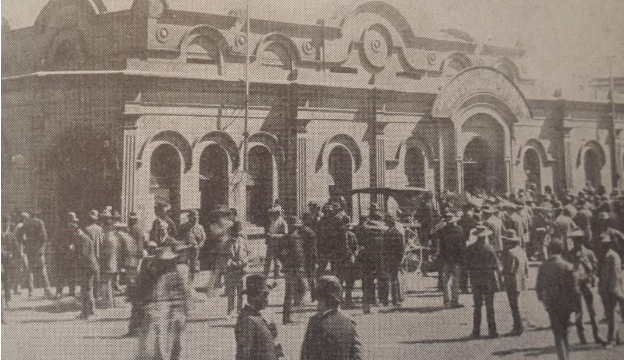
Historic Johannesburg Stock Exchange scene
Source: Wikimedia.

Introduction: The Glory and the Story

Every world-class institution, every symbol of enduring success, is built on a foundation of struggle, improvisation, and relentless belief. The JSE's present-day glory - its towering market capitalization, global ranking, and regulatory excellence - was not preordained.

It was earned, one uncertain step at a time, by pioneers who dared to bring order to chaos. As an African entrepreneur and founder of ICRD Group Holdings, I see in the JSE's story a mirror for every founder, every dreamer, every builder on this continent. To every glory, there is a story - and the JSE's is one every entrepreneur should know.

The Founder's Tale: Benjamin Minors Wollan and the Birth of the JSE

The Johannesburg Stock Exchange was founded by Benjamin Wollan on 8 November 1887. In the fevered days of the Witwatersrand gold rush, Johannesburg was a city of tents, dust, and dreams. Into this maelstrom stepped Benjamin Minors Wollan, a London-born mining speculator who had cut his teeth in Kimberley's diamond fields.

Wollan saw what others missed: the need for structure in a market awash with speculation and uncertainty. On 8 November 1887, Wollan founded the Johannesburg Stock Exchange through the Johannesburg Exchange & Chambers Company (JECC).

The first trades took place not in marble halls, but in a miner's tent - an image that should inspire every entrepreneur who has ever started with nothing but vision and grit. Lacking infrastructure, regulatory clarity, or even a permanent address, Wollan became owner, operator, and regulator, forging trust where there was none. The JSE soon moved to stables at the corner of Saur and Commissioner Streets, a humble upgrade that spoke volumes about the resourcefulness required to build something lasting.

Wollan's journey was not without hardship. He faced fierce competition, wild market volatility, and the ever-present risk of failure. By April 1889, the JECC was taken over by Barney Barnato's Johannesburg Estate Company, ending Wollan's direct control. Yet his foundational vision endured.

The JSE outlasted its founder, becoming the backbone of South African - and African - capital markets. Wollan's story is the ultimate startup parable: one man, one insight, one broken market, and the courage to build structure where there was none.

The First Hundred Years: Surviving and Thriving Through Turbulence

Margot Bryant's Taking Stock: The First Hundred Years of the JSE chronicles an institution forged in adversity and tempered by history. The JSE's first century was a saga of adaptation, resilience, and reinvention.

Gold Rush Origins and Speculative Frenzy

The late 1880s were marked by wild speculation, fortunes made and lost overnight, and a desperate need for order. The JSE became the crucible in which South Africa's mining wealth was transformed into investable capital, channeling the chaos of the gold rush into the beginnings of a formal financial system.

War, Upheaval, and Resilience

The Anglo-Boer War (1899-1902) tested the JSE's mettle. Trading was disrupted, confidence shaken, yet the exchange survived. Through two World Wars, the Great Depression, and the turbulence of the early 20th century, the JSE adapted - sometimes battered, never broken.

Growth, Isolation, and Reinvention

The rise of South Africa's mining and industrial sectors in the early 20th century fueled the JSE's growth. Yet the apartheid era brought economic isolation, sanctions, and a shrinking pool of international investors. The JSE endured by focusing inward, innovating in the face of constraint, and preparing - often unknowingly - for a future reintegration with the world.

Reopening to the World

As South Africa transitioned to democracy in the early 1990s, the JSE emerged from isolation, ready to reclaim its place on the global stage. The lessons of survival, adaptation, and institutional memory would serve it well in the decades to come.

The Journey to World-Class Status: Modernization and Global Reach

The JSE's transformation from a regional exchange to a world-class institution is a masterclass in strategic evolution.

Key Milestones on the Road to Excellence

  • Electronic Trading (1996): After 108 years of open outcry, the JSE embraced electronic trading, leapfrogging into the digital age and setting a new standard for African markets.
  • Demutualization and Public Listing (2005-2006): The JSE became a public company, listing its own shares and aligning its governance with global best practices.
  • Product and Market Expansion: Acquisitions of the South African Futures Exchange (SAFEX) in 2001 and the Bond Exchange of South Africa (BESA) in 2009 diversified the JSE's offerings, making it a one-stop shop for equities, derivatives, and bonds.
  • International Partnerships: Collaborations with the London Stock Exchange and the creation of the FTSE/JSE indices brought global visibility and credibility.
  • Sustainability and Innovation: As a founding member of the UN Sustainable Stock Exchanges initiative and with the launch of the JSE Trade Explorer analytics platform, the JSE has positioned itself at the forefront of responsible, data-driven finance.

The JSE Today: By the Numbers

Here is a snapshot of the Johannesburg Stock Exchange's key metrics that highlight its scale, influence, and role within Africa and the global financial landscape:

  • Established: 1887
  • Market Capitalization: Approximately R24 trillion (~USD 1.3 trillion)
  • Number of Listed Companies: Around 450
  • Average Daily Turnover: Over R20 billion
  • Market Segments: Equities, Bonds, Derivatives, ETFs, and Real Estate Investment Trusts (REITs)
  • Number of Investors: Millions of individual and institutional investors globally
  • Foreign Investor Participation: Approximately 40% of total market capitalization
  • Technology: Fully electronic trading platform with cutting-edge market surveillance and settlement systems
  • Sustainability Focus: Over 60% of listed companies report on ESG criteria
  • Indices: Main indices include the FTSE/JSE All Share Index (ALSI), FTSE/JSE Top 40, and sector-specific indices
  • Global Ranking: Among the top 20 stock exchanges worldwide by market capitalization and liquidity
  • Employment: Directly supports thousands of jobs within South Africa's financial services ecosystem

The JSE remains a vital catalyst for capital formation, economic growth, and investment opportunities across Africa - continuously evolving to meet the demands of a modern, inclusive, and sustainable economy.

The JSE is now recognized by the World Economic Forum as one of the world's best-regulated financial markets, a testament to its commitment to integrity and investor protection. In January 2026, the FTSE/JSE All-Share Index reached an all-time high of 100,000 points - a symbolic milestone for an exchange that began in a tent.

The Merchant House Perspective: Building Enduring Institutions from African Soil

As the founder of ICRD Group Holdings - a modern Merchant House rooted in Africa and globally connected - I see the JSE not just as a financial institution, but as a metaphor for what is possible on this continent.

Our company, like the JSE, was born from a belief that African enterprise can shape global markets, that we can build institutions of enduring significance from humble beginnings.

ICRD Group Holdings operates across sectors - media, professional services, clean technologies, natural resources - connecting African entrepreneurs to global capital and opportunity. Our mission is to create sustainable economic, social, and ecological value, to be the bridge between African ambition and global possibility.

The JSE's journey is a blueprint for every African founder: start where you are, build with what you have, and never lose sight of the bigger picture.

Key Lessons for Contemporary Entrepreneurs: The JSE's Century of Wisdom

The JSE's story is rich with lessons for today's entrepreneurs - lessons forged in adversity, tested by time, and validated by success.

  1. Start Where You Are, With What You Have: Benjamin Wollan began in a tent, with little more than vision and determination. Do not wait for perfect conditions - start now, improvise, and adapt.
  2. Build Trust and Structure in Chaotic Markets: The JSE brought order to the gold rush. In uncertain environments, the entrepreneur who creates trust and structure becomes indispensable.
  3. Embrace Disruption Before It Forces Your Hand: The JSE's move to electronic trading was proactive, not reactive. Anticipate change and lead it, rather than being swept away by it.
  4. Transform Governance to Unlock Growth: Demutualization and public listing made the JSE more accountable and agile. As your business grows, evolve your governance to match your ambitions.
  5. Build Institutions, Not Just Businesses: Wollan's vision outlasted his tenure. Aim to create organizations that endure beyond your own involvement - institutions that shape markets and societies.
  6. Partnerships Amplify Reach and Impact: The JSE's alliances with the LSE and FTSE internationalized its influence. Seek partnerships that open new markets and bring fresh expertise.
  7. Regulation Is the Foundation of Innovation: The JSE's reputation for regulatory excellence is a competitive advantage. Embrace regulation as a platform for trust, not a barrier to progress.
  8. See Africa as a Global Opportunity: With 60% of Africa's equity market value, the JSE proves that African markets are not peripheral - they are central to global growth. Think big, think continental.
  9. Resilience Is Built Over Generations: The JSE survived wars, sanctions, and crises. Build your business to withstand shocks, adapt to new realities, and thrive across generations.
  10. Your Startup Story Is Your Greatest Asset: Every world-class institution has a humble origin. Own your story, share it, and let it inspire others. To every glory, there is a story.

Conclusion: The Story Continues

The JSE's journey from a miner's tent to a trillion-dollar exchange is not just a tale of financial success - it is a story of vision, resilience, and the relentless pursuit of possibility. For every African entrepreneur, the lesson is clear: greatness is not born in comfort, but in the willingness to build, adapt, and endure.

As we at ICRD Group Holdings continue our own journey - rooted in Africa, globally connected - we draw inspiration from the JSE's story. May every founder, every dreamer, every builder on this continent remember: to every glory, there is a story. Write yours boldly.

We congratulate Valdene Reddy on her recent appointment as CEO of the Johannesburg Stock Exchange. Her leadership ushers in a new era of innovation and growth for this historic institution. We also celebrate the remarkable legacy of outgoing CEO Leila Fourie, whose vision and dedication have strengthened the JSE's role as a cornerstone of Africa's financial landscape.

The Merchant House Legacy: From Ancient Trade Empires to Modern Entrepreneurship

Throughout the annals of history, merchant houses have stood as the architects of global trade and innovation, silently shaping the economies, cultures, and societies of their time. From the gold-laden caravans of ancient Africa to the revolutionary joint-stock companies of Europe, these pioneers laid the foundation for the business world as we know it today.

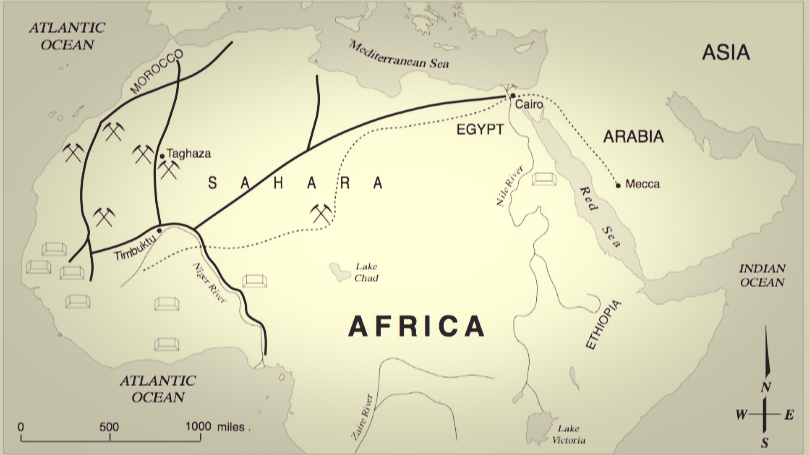
Historic African trade routes map
Historic African trade routes across the Sahara and beyond.

The Modern Relevance of Merchant Houses

As we navigate the complexities of a rapidly evolving global economy, the lessons from these merchant houses remain profoundly relevant. They remind us of the value of long-term vision, strategic alliances, and innovation in building sustainable enterprises.

Today, ICRD Group Holdings, which I proudly founded in 2008, carries forward this illustrious legacy by blending the rich merchant traditions of Africa with modern strategies and global connectivity.

In this article, I will explore the timeless lessons from ancient merchant dynasties while highlighting how ICRD Group Holdings has reimagined the merchant house for the 21st century: Rooted in Africa. Globally Connected.

The Timeless Foundations of Trade: Lessons from History

1. Africa's Golden Age of Merchants

Long before the rise of European trading powers, Africa was a thriving epicenter of commerce, innovation, and cultural exchange.

  • The Ghana Empire (6th-13th Century): Known as the "Land of Gold," Ghana controlled the trans-Saharan trade routes, transforming its capital, Kumbi Saleh, into a bustling hub of commerce and innovation.
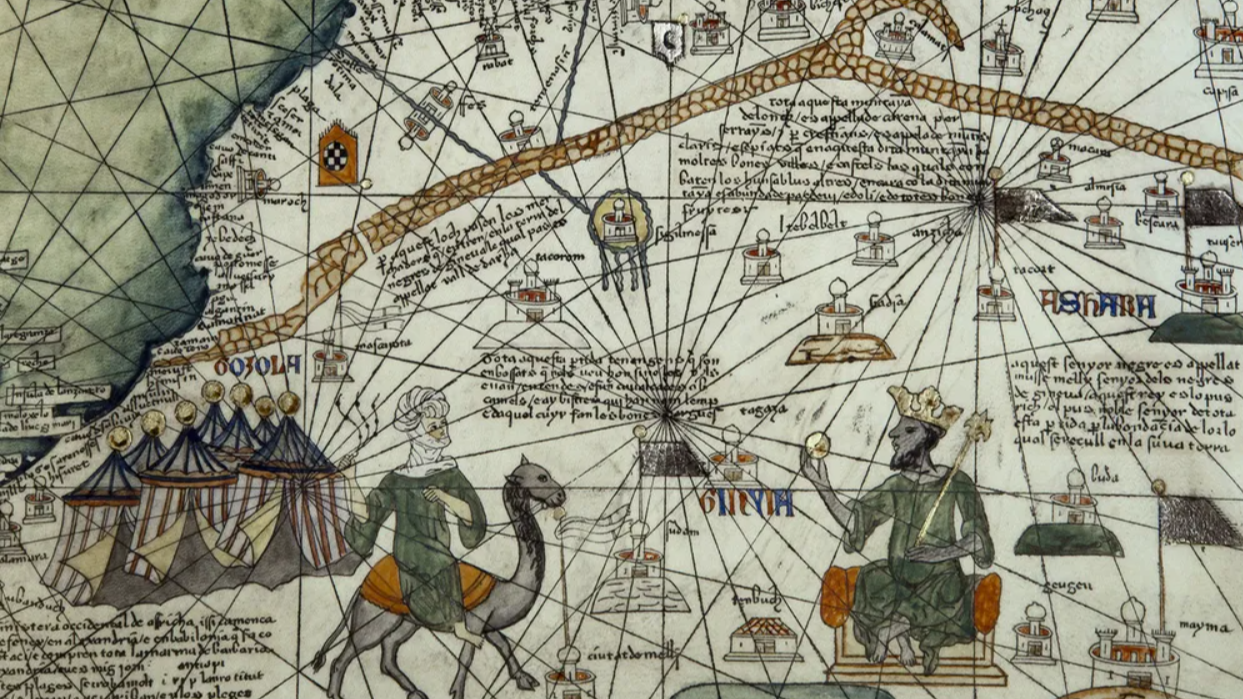
  • The Mali Empire and Mansa Musa: Under Mansa Musa, Mali's wealth and influence reached legendary status. His 1324 pilgrimage to Mecca, marked by an opulent display of gold, turned Timbuktu into a global centre of trade, learning, and diplomacy.
  • The Swahili City-States (8th Century Onward): Coastal cities like Kilwa, Mombasa, and Zanzibar connected Africa to Arabia, India, and China, trading gold, ivory, and spices. These cities thrived on collaboration and cosmopolitanism, creating trade networks that transcended borders.

Key Takeaway: Africa's merchant empires demonstrated the power of connectivity, innovation, and cultural exchange, proving that trade is not just about profit - it is about building ecosystems that stand the test of time.

The Global Reach of Merchant Houses

The model of the merchant house flourished across continents, driving trade, finance, and economic transformation.

  • The Hanseatic League (13th-17th Century): This network of merchant guilds dominated Northern European trade for centuries, showcasing the strength of collaboration and shared resources.
  • The Dutch VOC and British East India Company: These early corporations revolutionized global trade with innovations such as joint-stock ownership, centralized governance, and international logistics. They laid the blueprint for modern multinational enterprises.
  • The Rothschilds and Medici Dynasties: These families mastered finance and innovation, creating modern banking systems, sovereign lending, and cross-border trade networks.

Key Takeaway: Merchant houses thrived by embracing innovation, forging alliances, and maintaining a long-term vision - principles that remain critical for entrepreneurs today.

ICRD Group Holdings: A Modern Merchant House

At ICRD Group Holdings, we see ourselves as the modern heirs to the merchant house legacy. Rooted in Africa's rich heritage, we are driven by a vision to create a sustainable and impactful global enterprise.

  1. Triple-Bottom-Line Philosophy: We prioritize people, planet, and profit, ensuring that economic growth is not achieved at the expense of social and environmental well-being. This approach echoes the values of Africa's merchant empires, which balanced commerce with community and sustainability.
  2. A Diversified, Integrated Business Model: ICRD Group Holdings operates across multiple sectors, including venture building, capital raising, trade, and philanthropy. This mirrors the strategies of historical merchant houses, which diversified their operations to mitigate risk and seize opportunities.
  3. Bridging Local and Global Markets: Much like the Swahili Coast traders who connected Africa to the world, ICRD Group Holdings fosters partnerships that link African opportunities with global capital and expertise. We position Africa as a leader in the global economy while creating mutually beneficial partnerships.
  4. Leading Innovation in Critical Industries: ICRD Group Holdings is pioneering Africa's role in the global energy transition by investing in critical minerals like lithium, copper, and graphite, particularly in countries like Mozambique and Zambia. These resources are essential for electric vehicle batteries and renewable energy systems, placing Africa at the heart of the world's future energy supply chain.

Key Insight for Entrepreneurs: ICRD Group Holdings' focus on beneficiation - adding value to raw materials through local processing and manufacturing - demonstrates the importance of moving up the value chain to maximize both impact and profitability.

Lessons for Today's Entrepreneurs

The legacy of merchant houses offers a blueprint for entrepreneurs seeking to create sustainable and impactful businesses:

  • Think Long-Term: True success requires patience, vision, and a focus on enduring impact rather than short-term gains.
  • Build Ecosystems: Like Africa's ancient trade networks, foster communities of collaboration, innovation, and shared growth.
  • Embrace Global-Local Connectivity: The most successful businesses bridge local opportunities with global markets, creating partnerships that thrive on mutual benefit.
  • Innovate Relentlessly: From the Medici banking systems to the VOC logistics model, history rewards those who adapt and innovate.
  • Balance Profit with Purpose: The future belongs to businesses that integrate social and environmental goals into their core strategies.

Conclusion: Building Africa's Future, Together

At ICRD Group Holdings, we are not just building a business; we are redefining what it means to be a modern merchant house. By drawing on Africa's rich commercial history and infusing it with contemporary innovation, we are creating a new legacy - one where Africa leads the way in sustainable, inclusive growth.

As entrepreneurs, we are the heirs of Africa's merchant kings and queens, the Medici visionaries, and the Rothschilds financiers. It is our responsibility to carry forward this legacy, transforming commerce into a bridge between past and future, local and global, profit and purpose.

Together, we can build a future where Africa is not just a participant in global commerce but a leader, innovator, and inspiration to the world.

Rooted in Africa. Connected to the World.

Africa's Merchant House for the 21st Century: Reclaiming a Legacy, Shaping the Future

An article by Lucky Litelu, Founder and Executive Chairman, ICRD Group Holdings. Commerce is the heartbeat of progress - honoring past legacies while embracing technology and innovation for global impact.

Historic African trade map detail
A historic trade map detail linking Africa to global routes.

The Merchant Houses That Shaped the World - and the Question for Our Time

History remembers the great merchant houses not just for the fortunes they amassed, but for the worlds they built. The Medici of Florence financed the Renaissance, underwriting art, science, and the birth of modern banking. The House of Rothschild connected capitals and crowned heads, pioneering cross-border finance. The East India Company and Jardine Matheson mapped new trade routes, built infrastructure, and - sometimes controversially - reshaped societies.

These merchant houses were more than traders. They were ecosystem architects: connectors of capital, commerce, and culture. They built bridges between continents, created new markets, and left legacies that endure in the very fabric of global capitalism.

But what if the next chapter of this story is not written in London, Amsterdam, or Hong Kong - but in Johannesburg, Lagos, Nairobi, and Accra? What if Africa, long the source of commodities and creativity, now becomes the architect of its own destiny - on its own terms?

Reckoning with Legacy: From Extraction to Empowerment

Let us be honest: the legacy of the merchant house is complicated. For every cathedral or innovation financed, there was also extraction, exclusion, and inequality. Too often, Africa was the object, not the author, of global commerce - a continent whose resources and talent fueled distant empires, but whose people were left out of the story.

The 21st century demands a new kind of merchant house - one that learns from history but refuses to repeat its injustices. One that puts African agency, justice, and sustainability at its core. One that measures success not just in profit, but in people and planet. This is the challenge - and the opportunity - before us.

My Founding Vision: Building ICRD Group Holdings

In 2008, I founded ICRD Group Holdings with a simple but radical conviction: Africa deserves institutions that are both commercially excellent and socially transformative. I saw a gap - a need for a new kind of development institution, one that could unlock Africa's potential by bridging local ingenuity with global opportunity.

I wanted to build more than a company. I wanted to build a platform - a modern merchant house - that could empower visionary entrepreneurs, mobilize capital for impact, and create ecosystems where innovation, inclusion, and sustainability are not afterthoughts, but the foundation.

Reimagining the Merchant House: The ICRD Group Holdings Model

What does it mean to be a merchant house for the 21st century? For us at ICRD Group, it means managing a diverse, Pan-African portfolio that spans:

  • Critical minerals: The cobalt, lithium, and rare earths powering the global energy transition, traded ethically and with African value addition.
  • Renewable energy: Projects that drive energy equity and climate resilience, lighting up communities and industries.
  • Fintech and digital innovation: Empowering financial inclusion and leapfrogging legacy barriers.
  • Soft commodities: From cocoa and coffee to cotton and grains, connecting African producers to global markets on fair terms.
  • Venture philanthropy and trade facilitation: Supporting entrepreneurs, building capacity, and unlocking new pathways for growth.

We do this through an integrated model: venture building, capital raising, advisory, creative agency, trade and commodities, and philanthropy. Our triple-bottom-line philosophy - people, planet, profit - is not a slogan. It is the lens through which every decision is made.

In 2024, our commitment to innovation was recognized with the South African government's Innovation Excellence Award. But our true measure of success is the lives changed, the ecosystems built, and the future we help shape.

The Modern Merchant Manifesto

At ICRD Group Holdings, we believe the modern merchant is not just a businessperson - it is a mindset, a movement, a blueprint for a new generation of African entrepreneurship. The modern merchant is:

  • Purpose-driven beyond profit: Measuring success by collective impact, not just personal gain.
  • Innovation-oriented: Embracing technology, digital tools, and rapid adaptation.
  • A storyteller and connector: Using narrative to inspire, educate, and build networks across borders.
  • Resilient and resourceful: Turning setbacks into learning, maximizing every resource.
  • Ethical and sustainable: Prioritizing integrity, environmental stewardship, and social responsibility.
  • Globally ambitious, locally rooted: Aiming for international impact while honoring African cultures and traditions.

This is not just our company description. It is our philosophy. It is our invitation to a movement.

The Modern Merchant is more than a businessperson; it is a mindset, a movement, and a blueprint for a new generation of African entrepreneurship.

Africa's Moment: The World's Next Merchant House

Why now? Because Africa stands at a crossroads - and at the center of the world's future.

  • Demographics: By 2050, Africa will be home to one in four people on the planet - a youthful, dynamic population ready to shape the future.
  • Trade: The African Continental Free Trade Area (AfCFTA) is creating the world's largest free trade zone, unlocking intra-African commerce and global competitiveness.
  • Resources: Africa's mineral wealth is indispensable to the global energy transition. But this time, value must be created and retained on the continent.
  • Innovation: From fintech to creative industries, African entrepreneurs are leapfrogging old models and setting new standards.

This is not just Africa's century. It is the century where an African-led merchant house can redefine global commerce - rooted in justice, powered by innovation, and connected to the world.

Join the Movement: Rooted in Africa. Connected to the World.

The story of the merchant house is being rewritten. This time, Africa is not the object - it is the author. At ICRD Group Holdings, we are building the bridges, the platforms, and the ecosystems for a new era of prosperity - one that is inclusive, sustainable, and globally relevant.

To investors, entrepreneurs, policymakers, and changemakers: the invitation is open. Let us build Africa's future - together.

Rooted in Africa. Connected to the World.

Podcast

The Modern Merchant Podcast

From Good to Great: A New Era of African Entrepreneurship.

Summit

Africa Investment Summit

The premier platform for connecting African opportunities with global capital.

Think & Do

Research & Publications

Data-driven market intelligence, reports, white papers, and sector deep-dives.

Minimal channels. Stronger signal.

01

Africa's Capital Stack

How equity, debt, concessional finance, and philanthropy can work together without diluting accountability.

02

The Modern Merchant Class

Founder, investor, operator, and policymaker conversations on building companies that outlast hype cycles.

03

Trade with Traceability

Research on value-added African trade, critical minerals, agriculture, natural resources, and responsible supply chains.

Bring ICRD Group into the room.

For convenings, research partnerships, or strategic commentary, start with a focused brief.